

Introduction
Factory floors today look almost nothing like they did even a decade ago, and the pace of change keeps accelerating rather than slowing down. Sensors, artificial intelligence, and increasingly capable robotics are reshaping how industrial systems actually operate, moving well past simple automation into something closer to genuine intelligence built into the equipment itself. Looking at how these technologies are actually being used helps explain why so many industries are investing heavily in this shift right now.
This rapid shift toward interconnected and intelligent equipment is fundamentally redefining what industrial technology can accomplish on a day-to-day basis. Rather than relying on static, isolated machinery, modern facilities are deploying integrated digital frameworks that unify data collection, predictive analytics, and automated workflows. By transforming passive hardware into active, responsive assets, companies can optimize resource allocation, enhance worker safety, and streamline operations in ways that were previously unimaginable.
Connected Sensors Are Turning Machines Into Data Sources
Industrial IoT has connected machines and devices to central systems, making it possible to monitor equipment health continuously rather than waiting for scheduled inspections. This kind of connectivity allows predictive maintenance that can reduce downtime by as much as 50 percent, since problems get caught and addressed before they escalate into a full breakdown that halts production entirely.
AI Is Moving From Simple Automation to Real Decision Support
Rather than fully autonomous control, most industrial operations are settling into what’s being called augmented automation, where AI handles repetitive cognitive tasks like anomaly detection and scheduling while humans stay in the loop for consequential decisions. This balance reflects a genuine caution in the industry, since mistakes on a factory floor carry real physical consequences that a purely software-driven approach isn’t yet trusted to handle alone.
Robotics Are Becoming More Adaptable to Unstructured Environments
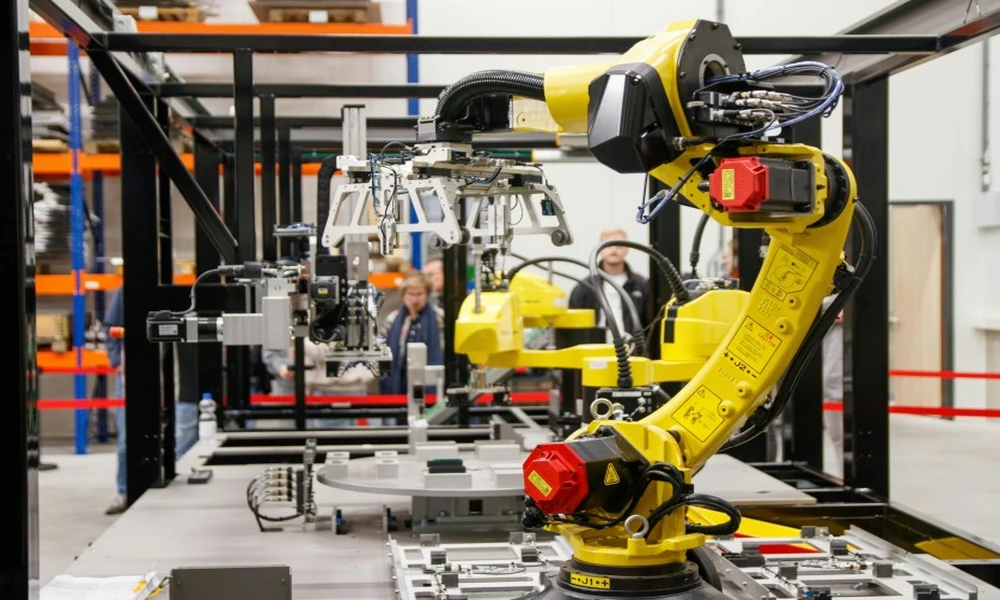
Newer robotic systems are moving away from rigid, pre-programmed movements toward genuinely adaptive behavior, using vision and sensor fusion to perceive their surroundings and adjust in real time. This shift lets robots handle tasks that used to require constant human oversight, working through unexpected variability on a production line rather than stopping the moment something doesn’t match the original script.
Software-Defined Systems Are Reducing Dependence on Fixed Hardware
A growing number of automation vendors are building software-defined systems that decouple control logic from proprietary hardware, letting facilities modernize gradually instead of undergoing a disruptive full replacement. This approach allows engineering practices borrowed from software development, like continuous testing and incremental updates, to apply directly to industrial operations for the first time.
The Human Element Remains a Deliberate Part of the Design
Despite the growing sophistication of these systems, most organizations are deliberately keeping people involved in high-stakes decisions rather than pursuing full autonomy. That caution isn’t a sign the technology is lagging, it reflects a considered approach where AI handles the repetitive analytical work while human judgment stays responsible for decisions with real physical consequences.
Conclusion
The technologies reshaping industrial systems today share a common thread, they’re making equipment smarter and more responsive without necessarily removing people from the process entirely. Connected sensors, AI-assisted decision-making, adaptable robotics, and flexible software architecture are together pushing factories toward a model where humans and machines each handle what they do best. That balance, rather than full automation for its own sake, appears to be where the real momentum in industrial technology is actually heading.
